





Are Kei Trucks Legal in Texas? What Are the Regulations?
Key Takeaways
- Kei trucks must be at least 25 years old to be imported into the U.S.
- Texas allows statewide registration of Kei trucks, but their use on public roads and highways varies by county or city.
- Kei trucks in Texas may need to have safety equipment like seatbelts and lights installed before they can be driven.
- Some insurers consider Kei trucks to be off-highway vehicles and won’t offer coverage.
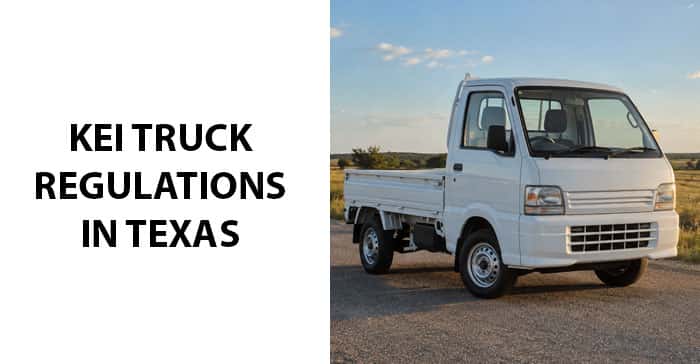
Because of their compact size, fuel efficiency, affordability, and reliable Japanese engineering, Kei trucks are increasingly popular in the United States. But are Kei trucks legal in Texas? For years, there haven’t been any specific regulations. Some counties allowed Kei trucks to be licensed and registered, while others treated them as off-highway vehicles.
However, Texas SB 1816, passed in 2025, provides clear direction that classifies Kei trucks as mini vehicles that are eligible for registration, provided they meet certain conditions.
In this guide, we’ll discuss how you can make a Kei truck legal, where you can drive them, and other considerations for lawfully using mini trucks.
How To Buy A Car In TexasHow Much is Tax, Title, and License in Texas?
How Can You Make a Kei Truck Legal in Texas?
Ever wondered, “Are Kei trucks legal in Texas?” In order to legally drive a Kei truck in Texas, you must follow federal laws and state regulations. The National Highway Traffic Safety Administration (NHTSA) prohibits the import and use of vehicles that are not manufactured specifically for use in the United States.
While this prevents the purchase and use of new Kei trucks, the NHTSA makes an exception for those 25 years old and older. Once you receive your legally imported Kei truck, you can register it with the TxDMV.
Where Can You Drive a Kei Truck in Texas?
While legally imported Kei trucks in Texas can be registered, there is no statewide rule about where you can drive a Kei truck. Cities and counties throughout the state often have different laws.
In more rural areas, Kei trucks are typically allowed on all public roads. However, urban areas like Houston, Dallas, and Austin often ban Kei trucks from all highways due to their slower speeds. Other counties limit Kei trucks to roads with speed limits of 45 mph or lower. Make sure you check relevant laws before you hit the road with your Kei truck.
What Are the Registration Issues?
Some common registration issues to be aware of include:
- 25-year importation law: Just because you find a Kei truck for sale doesn’t mean it’s eligible to be imported. Make sure you purchase from a reputable dealership with proper paperwork.
- Import documents: Incomplete or unclear import documents can delay or block registration. Make sure you get U.S. Customs Form 7501 (Entry Summary), the original Japanese export certificate, and a bill of sale. Going through a legitimate importer will ensure you get everything you need.
- Safety equipment: Some Kei trucks don’t have the necessary safety equipment installed. If equipment doesn’t meet safety standards, you’ll need to install the compliant parts before you can register the truck.
- Insurance: Some insurers consider Kei trucks off-road vehicles and won’t provide proper liability insurance. You’ll need to have the right coverage before you can register your Kei truck in Texas.
Can You Trade In A Car With Negative Equity?
Do Different Parts of Texas Have Different Regulations for Kei Trucks?
Yes. While the state provides authorization to title and register Kei trucks, cities, counties, and municipalities have varying traffic ordinances that affect where you can legally drive them. Check city ordinances, HOA rules, and local police/transportation department guidance if you plan to use the Kei truck on public roads.
How to Know if a Kei Truck Is the Right Fit for You
A Kei truck might be right for you if:
- You’re looking for an affordable vehicle for farm/ranch chores, yard work, short, local errands, and hobby use.
- You’re mostly going to drive on local streets at low speeds or on private property.
- A full-sized pickup truck is too large for your needs.
- You live in a rural area.
Consider alternatives to Kei trucks if:
- You plan to drive long distances daily at highway speeds.
- You don’t want to deal with importing a vehicle.
- You’re unwilling to deal with the hassle of specialty vehicle maintenance.
Additional Kei Truck Regulations You Should Know About
- While Texas no longer requires safety inspections for non-commercial vehicles, the state laws surrounding safety equipment still apply. If missing, install the necessary safety equipment. That includes seat belts, lights, and signals.
- If you plan to use a Kei truck for commercial hauling, check weight and load regulations. These vehicles are light-duty and may not meet requirements for certain commercial vehicle categories.
- Check municipal codes that might limit street parking, on-street use, or the presence of “nonstandard” vehicles in residential zones.
Alternative Options to Kei Trucks
Kei trucks are fun and useful, but if you don’t want to deal with the hassle of importing a Kei truck, here are some alternatives to consider:
- Ford Maverick: This compact pickup truck is a practical, family-friendly option. Its size makes it easy to park in tight spaces. Plus, it comes with a hybrid powertrain that provides excellent fuel economy.
- Hyundai Santa Cruz: Another compact truck, the Hyundai Santa Cruz has a smooth ride and a stylish appearance with decent horsepower.
- Jeep Gladiator: This mid-sized truck is more spacious than the Maverick or Santa Cruz and has a five-foot bed for hauling equipment. It also handles off-road exploration like a pro.
- Small utility trailer: If you only need cargo capacity occasionally, a trailer paired with a reliable car can be more versatile than a Kei truck.
- Small UTVs: Side-by-sides are great for farm and property work but are usually restricted from public roads.
Kei Trucks in Texas Conclusion
With their compact size and affordable price, Kei trucks are gaining popularity in the U.S. But are Kei trucks legal in Texas? The new law classifies Kei trucks as mini vehicles and allows them to be registered statewide. Still, the import process can be stressful, which is why many people turn to alternatives.
If you’re looking for alternatives to a Kei truck, Boggus Tipton offers a wide variety of vehicles. Stop by today to talk with our friendly staff and find a vehicle or trailer that suits your utility needs! We have a huge selection of new and used trucks of all sizes for you to choose from. We’re in Brownsville, but we serve all of Texas, including Harlingen, Austin, Houston, Corpus Christi, and more. Plus, we can help you with all your auto repair needs, from oil changes to transmission repair and tires.
FAQs
Can you make a Kei truck highway legal?
Kei trucks usually have a top speed of between 55 and 65 mph, and there aren’t really any modifications that can be made to adjust that. Because of this, some counties limit their use to slower roads. Make sure to check with your county before heading out on the highway.
Do Kei trucks have lower insurance rates?
Kei trucks typically cost less to insure than full-sized pickup trucks because of their limited use and lower speeds. However, rates vary by your provider and your driving history.
Does it have to be older than 25 years to be legal in Texas
Yes, per regulations by the NHTSA, Kei trucks must be at least 25 years old to be imported legally. Texas follows these federal laws and will only title/register lawfully imported Kei trucks.
Paste this FAQ schema into a code block on the page containing these visible FAQs:
“`html
“`

0 comment(s) so far on Are Kei Trucks Legal in Texas? What Are the Regulations?